

In the past, recording calls was seen merely as a safeguard or reference.
Today, under MiFID II, FCA, FINRA, Dodd-Frank, GDPR, PDPA,
communication recording has become a legal obligation and a core part of risk governance.
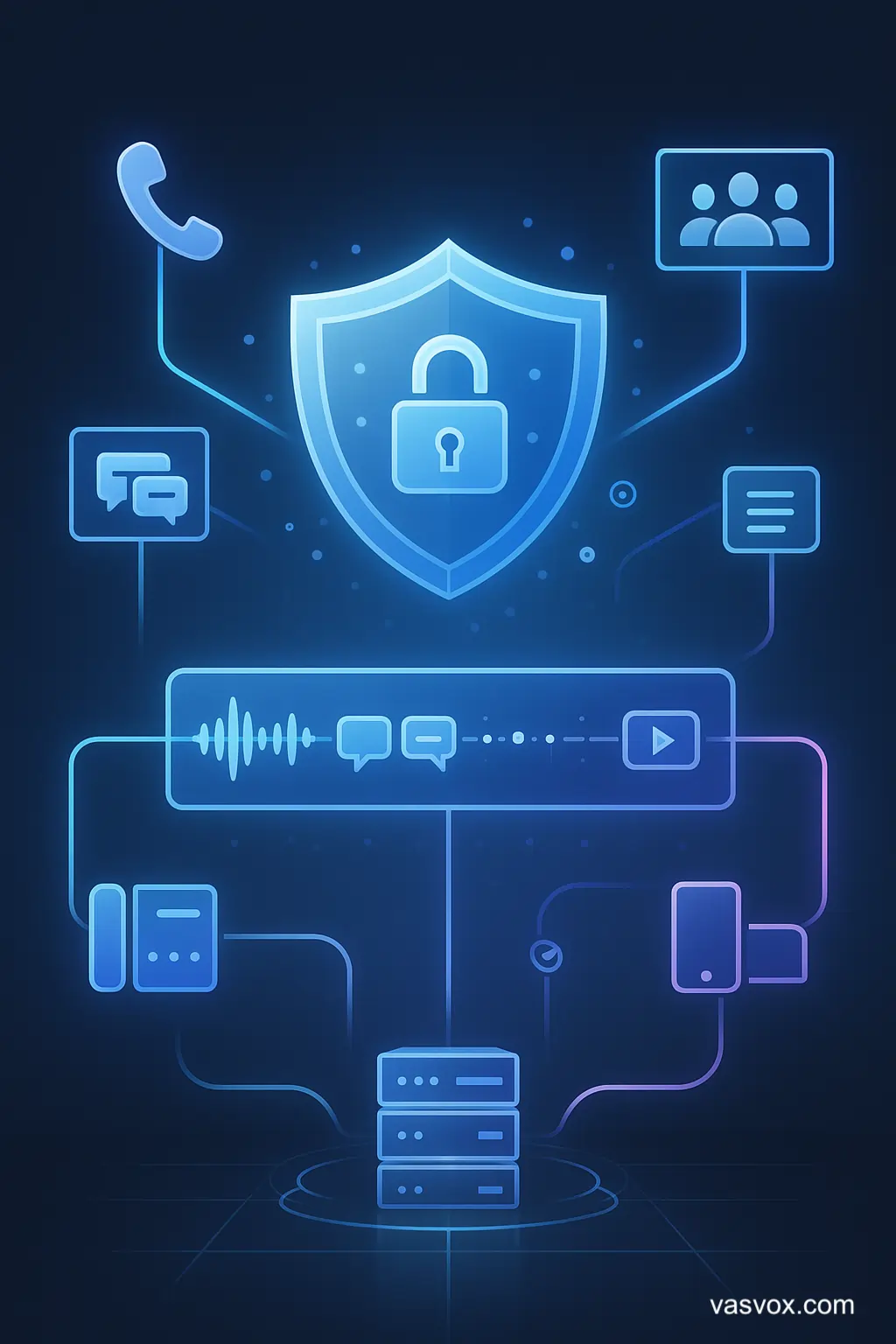
Compliance Recording refers to recording communications (Voice, Video, Chat) in line with legal and regulatory requirements spanning financial regulation, data protection, privacy, and industry standards. It is not just “pressing the record button” – it is about designing the right architecture, processes, policies, retention, and searchability to meet the obligations your organisation is accountable for.
For regulated entities such as banks, brokers, insurers, hospitals, and government agencies, lacking a robust recording framework can lead to fines, investigations, loss of credibility, and a structural disadvantage in disputes that hinge on “who said what, when, and how”.
A range of laws and regulators around the world now explicitly require that communications involving investment advice, trading instructions, financial disclosures, and sensitive data are recorded and retrievable within defined timeframes.
In many scenarios, the absence of clear communication records means the organisation loses the benefit of the doubt – or is deemed to have failed to meet expected standards of disclosure and transparency.
While local regulations in ASEAN or Thailand may not yet mirror MiFID II or FINRA in full, the global trend is clear: “No digital evidence = higher risk” for regulated organisations.
A quick, practical view: “What do these frameworks have to do with our recording strategy?”
Data protection laws such as PDPA (Thailand) and GDPR (EU) treat voice, call recordings, and chat logs that can identify a person as personal data.
These regulations require that “communications relating to investment services and financial transactions” are recorded and retained – making Compliance Recording a non-negotiable capability.
When disputes arise – “The agent said one thing, but the contract says another” – or when the firm is accused of mis-selling, recorded conversations are the most powerful form of digital evidence.
Recording also enables Quality and Compliance teams to see the real behaviors of front-line staff in high-stakes situations – sales, complaints, sensitive cases, and more.
If we visualise the last 10–15 years as a timeline, we can clearly see how regulations have moved closer and closer to our day-to-day communications.
Some organisations started recording calls to have evidence in disputes with customers, but without a clear legal or standards-based framework.
MiFID II, Dodd-Frank, FINRA, HIPAA, and PCI-DSS define what must be recorded, how long to keep it, and how records should be protected and accessed.
Organisations now go beyond storage. They deploy Speech Analytics, AI Policy Engines, and Auto QM to move from sampling-based review to near-100% coverage with automated risk alerts.
A mature Compliance Recording strategy should not stop at storing audio files. It should also answer:
This is where Vasvox solutions such as ASC Recording Insights, Speech Analytics, and AI Compliance Policy Engine come together to help your organisation get the most value from every conversation – across Compliance, Service Quality, and Business Insights.
Zero Trust • Encryption • Evidence Chain • AI without customer data training
If any of these answers are unclear, the Vasvox team can help you design a tailored blueprint and roadmap for your organisation.
Whether you operate in financial services, healthcare, public sector, or large-scale contact centers,
the Vasvox team can help you connect regulatory requirements, policies, and technology
into a solution that works in your real-world environment.